Hello Kitty: Beauty Salon
Hippo Kids GamesEducational
4.475.00 Reviews
- Version
- 1.5.0
- Installs
- 5.00M
- Age Rating
- Everyone
Screenshots
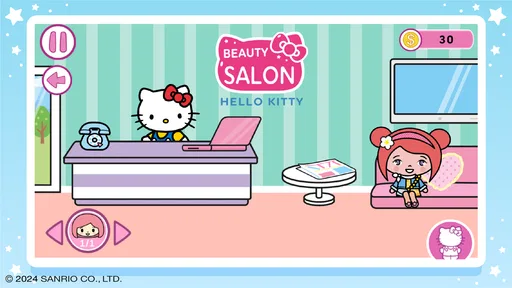
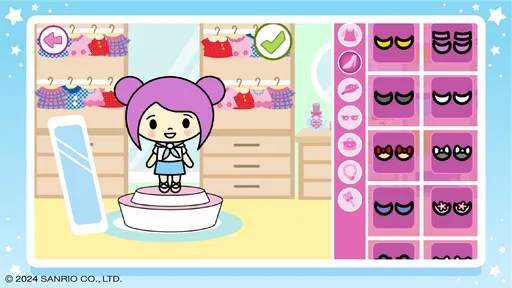
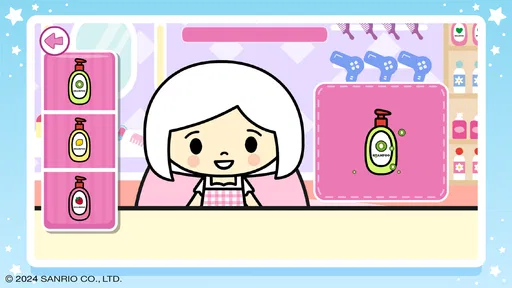
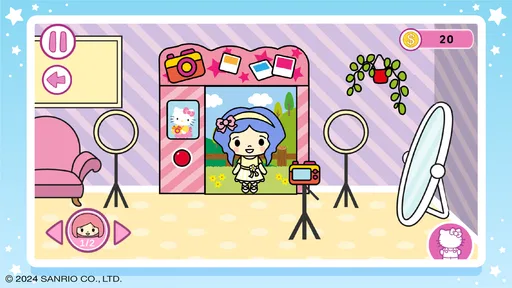
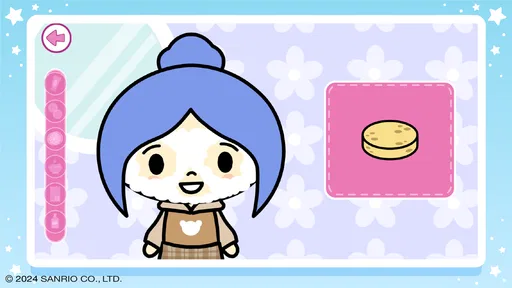
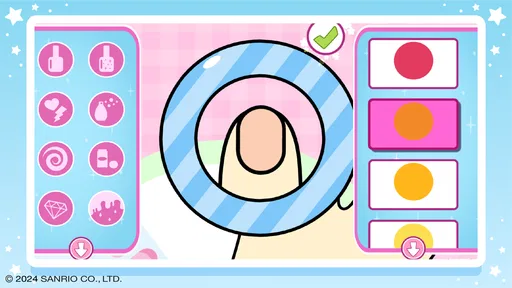
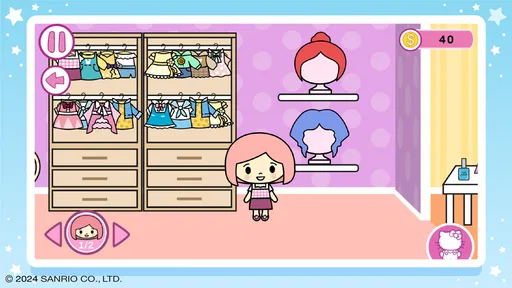
Our Review of Hello Kitty: Beauty Salon
 Analysis by Appyee
Playing Hello Kitty: Beauty Salon feels less like managing a serious salon and more like guiding a child through a cheerful make-believe activity. I tried it as an educational game from Hippo Kids Games, and its appeal is immediately clear: children can experiment with makeup, hairstyles, and manicures in a friendly Hello Kitty setting without needing to understand complicated rules first. It is free to download, rated for Everyone, and designed primarily for younger players who enjoy creative pretend play.
The important question is not whether this is a deep beauty simulation, because it is not. The better question is whether its simple goals, visible progress, and playful presentation are enough to keep a child interested after the first few minutes. My answer is generally yes, especially for children who like dressing up characters and making visual choices. However, parents should also understand that the experience is deliberately light, and the presence of optional purchases means it deserves the same supervision as other free children’s games.
How the first salon activities create clear goals
The opening appeal comes from the clarity of the tasks. A child does not have to learn a complicated economy, memorize combinations, or follow a long story. The focus is on familiar beauty activities: choosing a look, working on hair, and adding manicure details. These are easy concepts for a young player to understand, even if the child has never played a salon game before.
I found that this simplicity works best when the player wants an immediate creative result. The goal is not hidden behind a long tutorial or a difficult menu. A child can see the character, make a selection, and quickly notice how the appearance changes. That direct connection between action and result is one of the strongest educational qualities here. It encourages recognition, comparison, and personal choice without turning the activity into a lesson with pressure attached.
The Hello Kitty theme also gives the game a familiar emotional anchor. For children who already like the character, the salon setting makes the activities feel more personal than an anonymous makeover screen. For children who do not know Hello Kitty, the bright presentation still makes the game approachable, although the character theme is clearly part of its main attraction.
In an everyday situation, I can imagine this working well during a short quiet period at home. A child waiting for dinner, taking a break after school, or sitting beside a parent during a journey can open the game and complete a small beauty activity without needing constant instructions. The sessions are easy to understand in short bursts, which is more useful for younger children than a game that demands a long uninterrupted play session.
One practical tip is to let the child explain the choices instead of simply handing over the device. Asking why a hairstyle matches a manicure, or which colors look better together, turns a passive activity into a small conversation about planning and preferences. The game supplies the visual prompt, while the adult can add the reasoning that the game itself does not need to spell out.
Why the early objectives work for younger players
The early goals are successful because they are visible and concrete. A child can understand “make the character look different” much more easily than an abstract target involving points or complex instructions. This also reduces frustration. If a child makes a choice they dislike, the result is cosmetic rather than permanent, so experimentation feels safe.
That freedom matters in a beauty game. The enjoyment comes from trying combinations, not from finding one correct answer. I would not present it as a precision challenge where the player must produce a perfect salon result. It is closer to digital dress-up and guided creative play, with enough structure to give the child a reason to continue.
The trade-off is that children looking for action, competition, or a strong narrative may find the first activities too gentle. There are no signs that this is intended to be a fast arcade game or a demanding puzzle experience. Its early goals are suitable for calm play, but they will not satisfy every child simply because the game belongs to the educational category.
Progress signals that help children understand what they have done
A good children’s game needs to show progress without making the player read a lot. This salon experience benefits from the fact that progress can be seen directly on the character. A new hairstyle, makeup choice, or manicure treatment is immediately visible, so the child receives feedback through the appearance itself rather than through complicated statistics.
That is a useful design choice for children who are still developing reading confidence. The visual result acts as a progress signal: the look has changed, the activity has moved forward, and the player can decide whether to continue improving it. Even when the game does not feel like a traditional level-based adventure, the transformation of the character gives each action a sense of completion.
I also like that this kind of feedback supports different play styles. One child may focus on matching colors, another may prefer unusual combinations, and another may simply enjoy repeating the process. The game does not need to declare one style superior for the activity to feel rewarding. That makes it more welcoming than beauty games built around strict scoring, where a young player can quickly decide that they are “bad” at the game.
Parents wondering whether the game teaches anything should keep expectations realistic. It can encourage sequencing, visual discrimination, and creative decision-making, particularly when a child chooses an order for the salon activities or compares the result before and after a change. It is not a replacement for structured learning, but it can support small skills through repetition and play.
Using the visible result as a creative checkpoint
My most useful approach was to treat each completed look as a checkpoint rather than rushing immediately to the next choice. Looking at the finished appearance gives the child a chance to notice cause and effect. What changed when the hair was adjusted? Did the manicure make the overall style feel different? Which part does the child want to change next?
This makes the experience more thoughtful without adding rules that are not part of the game. It also helps prevent the common problem of tapping through every option without paying attention. The game is at its best when the child is making decisions, not when an adult is trying to optimize the result for them.
There is a limitation here: visual progress can become less exciting once the novelty of the salon theme wears off. Children who need badges, missions, competition, or a strong sense of unlocking may want more substantial milestones than a changing character appearance. That does not make the progress design poor; it simply shows that the game is aimed at relaxed creative play rather than long-term mastery.
Difficulty and pacing: gentle by design, limited by design
The difficulty curve is very mild. That is appropriate for the intended audience, because the activities are meant to be approachable rather than intimidating. A young player can explore the salon concept without facing the kind of failure loop found in action games or timed puzzles. The absence of heavy difficulty also makes it easier for a parent to recommend the game to a child who is just beginning to use mobile games independently.
From my perspective, the main challenge is not technical skill. It is deciding what kind of look to create and staying engaged with the sequence of beauty activities. That is a softer form of challenge, based on attention and choice. It can be valuable for preschool and early-school play, but older children may quickly want more demanding objectives.
The pacing follows the same philosophy. Actions are short, results are immediate, and the player can usually understand what is happening without a long explanation. This makes the game suitable for brief sessions. It also means that the experience does not build tension in the way a conventional game does. There is no reason to expect a dramatic difficulty spike or a demanding late-game test.
I would choose this over a more complicated makeover game for a child who becomes discouraged by failure or cannot yet manage dense menus. I would choose a different category of game for a child asking for strategy, problem-solving, timed performance, or competitive goals. The gentle pacing is a strength for the right player and a weakness for the wrong one.
Where the low difficulty becomes a weakness
Easy access can eventually become repetition. If a child enjoys the first transformation but does not find enough new decisions afterward, interest may fade. This is the central pacing trade-off: the game avoids frustration by keeping the experience simple, but simplicity also limits the sense of achievement for players who want to improve a skill.
For that reason, I would not describe it as a game that should occupy a child for hours. It works better as one option in a broader collection of age-appropriate activities. A parent can use it for a short creative break, then move to drawing, reading, or a more challenging educational game when the salon choices stop feeling fresh.
Another practical point is that children may need help understanding that there is no single “correct” beauty result. If they assume the game expects perfection, they may become unnecessarily focused on copying an adult’s choices. Encouraging them to test their own combinations makes the low-pressure design work as intended.
Unlocks, optional purchases, and the pressure to keep playing
Because this is a free game, the way it sustains interest matters. The basic attraction comes from continuing to create looks and explore the salon theme, while optional purchases can add a commercial layer to the experience. The listed in-app purchase range runs from around two dollars to around eight dollars per item, so parents should review the device’s purchase controls before allowing unsupervised play.
I do not see the free entry point as a problem by itself. It lets a family try the central idea before spending anything. The more important issue is whether a child understands the difference between an available activity and something that may require a purchase. Young players can easily treat a visible locked choice as a challenge they are expected to solve immediately, even when the solution is not gameplay progress.
This is where adult guidance is more useful than simply asking whether the game is free. I would play the first session together, identify which parts are accessible, and explain that not every visible option needs to be opened. If the child is using a shared phone or tablet, purchase authentication is especially important. That advice is not unique to this title, but the beauty format can make extra styles feel particularly tempting because they are directly connected to the character’s appearance.
The retention design is therefore moderate rather than aggressive from a gameplay perspective. The child can return for another makeover because the creative activity is pleasant, but the game is not built around a deep progression system that I would expect to hold attention for weeks. Its strongest retention tool is the wish to try another look, not a demanding chain of achievements.
How to keep the experience healthy and useful
A simple routine works well: set a short play period, ask the child to describe the look they want, and finish by reviewing the result. This gives the session a beginning and an ending instead of allowing endless tapping. It also makes the game more social, which is valuable because the activities themselves are designed around appearance and choice rather than complex independent problem-solving.
I would also avoid presenting purchases as rewards for good behavior. That can make the locked content feel more important than the creative activity already available. If a family decides to buy anything, it is better to make that a clear adult decision rather than an in-game surprise.
For children who are sensitive to commercial prompts or who become fixated on collecting every option, this may not be the best free game. A fully offline creative tool with no purchase pressure could be a better match, even if it offers fewer character-specific activities. On the other hand, families comfortable with supervised free-to-play games may find the purchase range manageable when controls are configured properly.
Who should play it, and who should choose something else
I think this is a good fit for younger children who enjoy Hello Kitty, pretend salon play, and visible creative changes. It is especially suitable for a child who wants to make choices without being punished for experimenting. The Everyone age rating supports that broad accessibility, while the educational classification reflects the game’s emphasis on simple, guided activities rather than combat or competition.
It is also a reasonable first salon game for a child who finds traditional games too difficult. The interface and objectives are easier to approach than a management game that expects the player to track customers, money, schedules, or complicated upgrades. Here, the child can concentrate on the fun part of the theme: making a character look different.
I would skip it for an older child who expects a detailed beauty simulator, a story with meaningful character development, or a long campaign with increasingly complex goals. I would also look elsewhere for children who prefer construction, logic puzzles, science experiments, or reading-based learning. The educational value here is tied to creative visual play, not broad academic coverage.
Compared with ordinary dress-up apps, the salon framing gives the child a little more structure because the activities are grouped around hair, makeup, and nails. Compared with serious makeover simulators, it is much less demanding and less concerned with realism. Compared with traditional educational games, it offers weaker academic progression but stronger immediate visual feedback. That balance explains both its appeal and its limits.
The developer, Hippo Kids Games, has positioned this as a child-friendly experience rather than a professional beauty tool. I would keep that distinction in mind when judging it. The game succeeds when it is treated as imaginative play with light learning benefits, not when it is measured against advanced simulation games.
Technical details and the practical download decision
The game is currently listed as version 1.4.4 and requires Android 7.1 or later. That makes it accessible to many Android devices that are not especially new, although a parent should still check the device’s available storage and performance before handing it to a child. I would also make sure the operating system and store account are managed by an adult, particularly on a shared family tablet.
Its popularity is substantial, with over five million installs and an average rating of 4.4 from around 4.8 thousand ratings. Those figures suggest that the basic concept has connected with a large audience, but they should not replace a judgment about your particular child. A popular Hello Kitty beauty game can still be the wrong choice for a child who dislikes repetitive creative activities or needs stronger educational structure.
The store listing also shows 71 written reviews, while the game remains free to install. I would treat the free price as an invitation to test the experience rather than a promise that every possible option is included without cost. The in-app purchase range is worth remembering before a child explores the game alone.
One small advantage of trying it is that the theme is easy to explain. You do not need to teach the child a complicated story or a set of game rules before the first session. A parent can simply say that the goal is to create a look and explore the salon activities. That low setup cost makes it convenient for occasional use, especially when a child wants something creative but the family does not want a demanding game.
My progression verdict after weighing the whole experience
My overall impression is that the progression is intentionally light. Early goals are clear, visual changes provide satisfying progress signals, and the difficulty curve stays gentle enough for young players. The game sustains interest through repeated creative choices rather than through a deep challenge structure. That is a coherent design, not a missing feature that every player should expect to complain about.
The trade-off is equally clear. Children who enjoy short, friendly salon activities may return often because creating another look is relaxing and easy to understand. Children who need increasingly difficult goals, meaningful unlocks, or a strong sense of mastery may move on quickly. The optional purchases add another reason for parents to supervise the experience, especially when a child is attracted to every visible style or beauty item.
I would recommend it as a supervised creative game, not as a complete educational curriculum or an all-day activity. It is most useful when a parent treats the salon as a starting point for conversation: ask the child to plan a style, compare the result, and explain the choices. That turns a simple makeover loop into a more intentional exercise in sequencing, observation, and imagination.
For the right child, the combination of Hello Kitty, approachable beauty activities, and immediate visual feedback is appealing enough to justify a download. For the wrong child, the same simplicity will feel repetitive, and a drawing app, puzzle game, or deeper simulation would offer more lasting value. I would begin with a shared session, keep purchases protected, and judge its success by whether the child is making thoughtful choices rather than merely tapping through the salon.
In short, this free educational game delivers exactly the kind of gentle pretend play its theme suggests. It does not need a steep difficulty curve to be enjoyable, but it also should not be mistaken for a game with extensive long-term progression. As a small, colorful activity for younger Hello Kitty fans, it earns a cautious recommendation; as a demanding game or comprehensive learning tool, it is not the right choice.
Privacy and Permissions
See what permissions an app requests and how it handles your data.
- Photos/Media/Files
- read the contents of your USB storage
- Storage
- read the contents of your USB storage
- Wi-Fi connection information
- view Wi-Fi connections
- Other
- view network connections, full network access, control vibration, prevent device from sleeping, Google Play license check
Verdict
Strengths of Hello Kitty: Beauty Salon
- Cute Hello Kitty visuals appeal to younger players.
- Simple controls make it easy for children to play independently.
- Many salon activities offer variety beyond basic dressing up.
- Short sessions work well for quick, casual entertainment.
- Familiar characters make the game inviting for Hello Kitty fans.
Limitations of Hello Kitty: Beauty Salon
- Some items or features may require in-app purchases.
- Gameplay can become repetitive after several salon makeovers.
- Limited challenge may not satisfy older or experienced players.
- Ads may interrupt play in the free version.
- The game may use considerable storage on some devices.
Other Releases by Hippo Kids Games
View All
Vlad & Niki Supermarket game
Educational4.7

Hello Kitty: Kids Hospital
Educational4.8

Hello Kitty: Good Night
Educational4.8

Vlad and Niki: Kids Piano
Music4.7
Similar Picks in This Category
View All
Little Panda Policeman
BabyBus4.0

Monster Trucks Game for Kids 2
Raz Games4.1

Little Panda's Chinese Recipes
BabyBus4.4

Little Panda's Restaurant
BabyBus4.4

Little Panda's Ice Cream Games
BabyBus4.3

Baby Panda Care
BabyBus3.8
Frequently Asked Questions
What is Hello Kitty: Beauty Salon?
Hello Kitty: Beauty Salon is a casual makeover and time-management game centered on Sanrio’s famous character. You run a colorful beauty salon, welcome customers, and provide services such as hairstyling, makeup, nails, and other cosmetic treatments. The game is designed for short, relaxed play sessions and combines simple tap-based controls with cute visuals and familiar Hello Kitty-themed decorations.
How do you play Hello Kitty: Beauty Salon?
The main gameplay involves serving customers by completing the beauty treatments they request. You select the correct salon station, follow the on-screen prompts, and try to finish each service efficiently. As you progress, new customers, salon activities, and customization options may become available. The controls are straightforward, so the game is accessible to children and casual players who prefer uncomplicated simulation gameplay.
Is Hello Kitty: Beauty Salon free to download and play?
Hello Kitty: Beauty Salon can generally be downloaded without an upfront purchase, although the exact availability and pricing may depend on the Android or iOS store and your region. Like many casual mobile games, it may include optional in-app purchases, advertisements, or unlockable content. Before downloading, it is worth checking the store listing for current purchase details, age guidance, and any requirements related to payments.
Is Hello Kitty: Beauty Salon suitable for children?
The game is aimed primarily at younger players and families, thanks to its bright presentation, friendly characters, and simple beauty-salon activities. However, parents should still review the current store rating and privacy information before installation. If the game includes advertisements, in-app purchases, or external links, parental controls can help prevent accidental purchases and limit access to content outside the main gameplay experience.
Does Hello Kitty: Beauty Salon require an internet connection?
Internet requirements can vary depending on the version of the game and the features offered on your device. Basic salon activities may work offline after installation, but advertisements, updates, purchases, synchronization, or certain online services could require a connection. For the most reliable information, check the app’s current Google Play or App Store description and test the game in offline mode after downloading it.
Play our best games!


